Man, oh man.
Labels: do make say think is better than anything you will ever do ever forever, Music
posted by Jeff Laughlin @ 2:22 AM
0 comments


Labels: do make say think is better than anything you will ever do ever forever, Music
posted by Jeff Laughlin @ 2:22 AM
0 comments
 Bruce Springsteen--Nebraska (album)
Labels: Drinking Alone, Jawbreaker makes me think for some reason, lists, Music
posted by Jeff Laughlin @ 1:45 AM
1 comments
 When I first heard
The instrumentation, while large in scale never overemphasizes itself. You never hear an out of place organ or horn, never an unnecessary guitar noodling, never a part that does not fit. They incorporate unbelievable melodies with horns, violins, keys, and electronic noodling. Concordantly, the vocals are around when they should be, silent when they have to be. The lyricists/vocalists take chances with the ethereal and even silly lyrics in the middle of serious moments.
For example, in “They Can Run,” the seemingly stereotypical forlorn love song, the focus of the lyrics shifts numerous times including injured animals drawing metaphorical buggies, blood, sunburn, and tons of food. It ranges from feeling classical 1800’s storytelling (“bought a horse/ with cracked feet… so tie on/ your wagon and/ head due east”) to casual references to going out for drinks and sub sandwiches.
The rambling blues riffs in “Flippin’ Burgs” contrast heavily with the airiness of “Why Do You Suppose.” Neutral Milk Hotel-ish in nature, the latter song uses heady cleverness, yet offsets this with a solid build in instrumentation that arrives at a perfect point. Turns of phrase and excuses for abnormal behavior beget the self referential end lyric “Why do you suppose/ I just can’t leave you alone?” The serious building and enigmatic “Sparrow” is both stoic and sad with a twinge of emotional response to a very delicate storyline that explains just as much through telling lines (“Sorry, don’t be cross with me/ if bent back and broke your wing/ I’ll see all the vultures shadows on the ground/ they don’t look a thing like me) as the song does through violin breaks, cadenced drum rolls and the undeniably beautiful coda.
The seemingly excessive “Country Mouse” is, in effect, the introduction track to exactly how talented this band really is: a battle of wits with the excess determination to use every ounce of sweat an album can make without being gaudy to the listener. It seems at any time during The Heilig-Levine LP the listener would be overstimulated, but the opposite effect exists. Unlike the building triumph of an instrumental juggernaut like Godspeed, You Black Emperor! or Silver 
Your long winded clichés
Won’t make you different
They’ll just prove you desperate
And like the sunset you’ll be gone
Just fucking around.
Meanwhile, the gentler refined songs grab the listener in more subtle ways: the aforementioned “They Can Run” is a stripped down masterpiece, “Chatterton” closes the album with a mellow sulk (I’ll come over/ and use you/ don’t misunderstand me/ I’m still your bitch” creeps in after a long stringed introduction. “Snakes” uses more of a building approach with short melodic blasts of strings and a grandiose arrival to the song’s apex. The song itself is as important as its placement—proof that the subtleties matter as much as the music itself. “Centipede,” with its mid-tempo dexterity pares bares back the loudness of “Fucking round” and provides an anti-sing-along a cappella midpoint with outstanding lyrical juxtaposition to the song’s lazy format.
That’s just it: the lazy movements and captured moments of The Heilig-Levine LP is offset by the work put in. Like a beefed up Karate, everything seems especially easily but reproduction is exceptionally hard. Trust me; I’ve tried on both accounts. What makes this album unbelievable is not that it is fundamentally better than some of my favorite veterans (Built to Spill, Roots, Channels, etc.) or more ample than the newcomers (Midlake, Page France, Grizzly Bear, etc.). It’s just that, to me anyway, this album is more successful in incorporating the listener (instead of trying to exclude—more on this in a future article), involving themselves, and inventing a new, albeit subtly so, sense of sound.
Read more:
websiteLabels: 2006, Best of, lists, Music, Ticonderoga is the awesome, Underlooked Albums
posted by Jeff Laughlin @ 5:52 PM
0 comments
When Bluetip’s Join Us came out in 1998, I had no idea who they were. In fact, I had only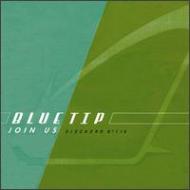 limited knowledge of their contemporaries. All I knew was Dischord Records had provided some other fantastic taste-altering selections in my young life: Minor Threat, Fugazi, Rites of Spring, Jawbox, Government Issue, etc. I was mostly juggling upbeat pop-punk (Promise Ring, Get-up Kids, etc.) and downtrodden rock (Jawbreaker, Sunny Day Real Estate). The former was a by-product of three years removed from society—a jaunt in military school that was as much fueled by jock-rock than any discernable tastes, i.e. I took what I could get and that was accessible pop—and the latter a notation of my life in a pit stop on the way to the North Carolina beaches. Jawbreaker (et al) and the occasional hardcore band were the outlets of choice for lifelong friends.
Bluetip’s importance, personally, ranged from a straightforward lyrical mentality. There was no referential “you” or lovelorn scenarios unexplained. There were no frills—no metaphors that didn’t fit or unwarranted emotional outbursts. The streamlined approach explained more without a victim mentality (victim’s mentality, see also: my entire record collection until 1999). This lack of showiness is, however big a downfall with modern audiences, a cat-call to the angry male (ages 18-27). This includes alternate takes on break-ups, the pursuit of happiness—including paring down one’s acquaintances while noting one’s loneliness)—work-related problems and a general awareness of one’s actions and consequences. From the first chord to the last, every phrasing complete thought, fragmented curse, and impartial judgment of character remains important to the ideas behind Join Us.
Joining Bluetip means a rejection of the groupthink ideal with absolutely no ideas on how to combat the consequences. It is, in fact, less embattled than the group’s angular rhythms and loud caterwauling would suggest. The overall aesthetic involves less acrobatic means than the norm—defensiveness and self-loathing—of personal lyrics. Instead of triumph over tragedy (or vice-versa), Join Us’ aesthetic involves a series of vignettes mixed with confessionals.
The first song, “Yellow Light,” is a short emphatic piece about as small victory leading to a greater understanding. It is a set-up for the failures and finality of the album’s stark awareness of faulty behavior:
Not always sad, just easier to write like that
When I’m depressed I think I want to stay like that
But man today things just barely went my way
It’s the happiest I’ve been in a long time.
(chorus) I made every yellow light today.
The improbability of something actually going well for the protagonist is immediately foremost. Later, when angry outbursts and separatism become the norm, the listener is not shocked. Instead, he/she awaits the levelheaded lyricist to explain himself. Songs like “Join Us,” “F-,” and “I Even Drive like a Jerk” may not repeat the simple and somewhat positive idea within “Yellow Light,” but they mirror the sensibility of self-awareness; of ordered (even sensed) dissension.
It’s that dissension that struck me when I heard “Yellow Light.” I was working at WUAG 103.1, the college radio station at UNC-Greensboro. I reached into the CD stacks to grab a Bluebird CD, an old staple for the end of my springtime radio shows. I didn’t realize I had the wrong CD until it was just abo ut time to play, so I played the first song, a short one. Needless to say I enjoyed it on a technical level immediately. The brevity struck me—this song said a lot in a little time—and I was intrigued to hear more. I went and bought the album three days later ($4 bucks on vinyl… I miss
Musically, Join Us’ high and low points are scattered. The first side (especially “Yellow Light,” “F-,” “Cheap Rip,” and “
Before “Join Us,” however, is the most atypical song on the album. “Cheap Rip” displays the lyrical cleverness, and musical assault of which Bluetip was capable. The description of writing an angry letter replaces the actual feelings being expressed to the person addressed in the letter. This use of the objective correlative is the separation point that defines Bluetip compared to their late-nineties (and onward) counterparts. Where most would describe the contents of the letter, they describe the process:
Third draft trying to scrawl “sorry,”
Take a second as I fold it slowly.
Stamps make shitty band-aids,
My letters come back stamped, “fuck the sender.”
The process makes up for the trite and abrupt lines. The listener can forgive raw emotion when it is masked, or in this case, introduced with an apologetic sense of accomplishment. We are more likely to understand the sentimentality of the situation if we actually know about it. Rather than resuscitating a vague image of love or broken-heartedness, Bluetip resurrects the ideas of being surreptitiously apologetic. The protagonist’s obstinacy is realized during the task—he learns this as we learn this.
“Carbon Copy” is a repetitive slow-to-a-fault build toward the more pointed “
I hear the S’s of their conversation.
I would be angry but I appreciate the honesty.
I press out days in perfect carbon copy.
I used to get angry, now I like the consistency.
In the “everyman” lyrical approach, Bluetip provides a cautious look into the skullduggery of work conversations—the craftiness of a man listening to other’s talk and assume that he is involved recalls the paranoia of Poe or Dostoyevsky set to an abrasive blues rock riff—the perfect song for Jason Farrell’s Rockabilly-esque vocal swagger.
“Castanet” offers the first glimpse into the speaker’s cause for anger: “I must’ve severed everyone I knew/ on the day my sisters pointed out the sense to call it quits with you.” Jason Farrell yells this with no accompaniment; driving home his own unwillingness to avoid problems (though the albums seems to be centered on ridding the protagonist of his problems). The solution is both omnipresent and unstated. While the listener knows that Farrell is obviously opining for a change, the change is in name only. He knows that losing someone’s company does not mean their lasting impression goes anywhere: “If I miss you, I can still do a damn good impersonation.”
The second side is a scatterbrained affair—“I Even Drive like a Jerk” is a marathon of prophecy and emphatic self-assuredness. It opens: “I got myself convinced/ that if I do die/ it’ll be in a car wreck/not as a direct result of any cross-eyed looks/ I might be getting from you.” Vocalist Jason Farrell gives more away in this song than any. The conditional feelings of his narration (if I die…) are his fault completely, but he at least claims to have another person in mind. The mystery guest is possibly a victim of his own beliefs, or the same person continually referenced in a justifiable break up (re: “Castanet”).
“Bad Flat” is the anti-anthem—a mid-tempo jam that uses staccato vocal meanderings with clever phrasings: “Every good day gets old.” “Sugar, come back to the cavity.” This song could double as a reprehensible study of a man drawn to drama or, simply, a case study in bad days and car trouble. Either way, it begins the descent of the album—the beginning of the album’s “giving up period.”
At some point, the general idea seems to be that nothing gets better. In 1999, I was unsure of this, but as I get older alongside Join Us—its unvarying nature and the constant brutality of mundane affairs—that idea has followed me throughout my ventures. At no point is this more prevalent than writing this article. The fading in and out of the final riff in the instrumental “Cold Start” running it’s course (J Robbins showing his face, no doubt). I am reminded of the past few jobs, the last few years, the rejections, the loss, the continual bleeding of good friends into the vastness of the coastlines, and the overtly negative feeling that belies each day not doing exactly what I love doing.
Still, the “giving up period” of the album retains the bittersweet dissension of small victories. “
The album, until this point, had made several assertions, but none as severe as the grandiose one set in the final songs. Farrell’s understanding comes full circle in “Slovakian.” His travels (presumably on tour) take him to
Fittingly, the return is glossed over. As are the final rebuttals and mentions of lessons learned. The point, finally, is as graspable to the listener as it is to the band. Through the impartiality, the banality, and the backstabbing, Join Us is a rejoinder to the vagueness of a Fugazi and the specific verboseness of a Jawbox. Bluetip wrote an accidental antithesis—an anticlimax of antipathy that drives home a point lost on most. Sometimes, there is no point. To a soon-to-be twentysomething, knowing that there was no point, that everything and nothing is your fault, that you have right to be angry, is pretty important. I’ve come to realize that these ideas are just as important now. The 1999 and 2007 versions of me don’t have a lot in common other than this album. Yet, in fact, Bluetip proves the old adage true: “the more things change, the more they stay the same.” I like the way they put it: “It’s yesterday back home.” The revolving doors of new and old lessons conjoining are, indeed, a Carbon Copy. Maybe I’m not so angry now, but I get it. Join Us is a big reason why.
Labels: Bluetip, Join Us, Music, Underlooked Albums, Where the hell have I been
posted by Jeff Laughlin @ 6:56 PM
3 comments
Lacking wherewithall and worn wire-thin from weariness.
